Depending on hydrologic and physicochemical characteristics, geographical location and landscape, and dominant plant type, aquatic plant habitats can be classified as the following:
- Shallow coastal and estuarine waters
- Salt marshes
- Tidal oligohaline marshes
- Freshwater marshes
- Freshwater swamps and riparian forests
- OBL: Obligate Wetland (99% probability occurrence in wetlands)
- FACW: Facultative Wetland (67-99% probability occurrence in wetlands)
- FAC: Facultative (34-66% probability occurrence equally in wetlands and non-wetlands)
- FACU: Facultative Upland (67-99% probability occurrence in non-wetlands)
- UPL: Obligate Upland (99% probability occurrence in non-wetlands)
- NO: The species does not occur in that region
"+" indicates the wetter side of the category (e.g. FACW+)
"-" indicates the drier side of the category (e.g. FAC-)
Major Aquatic Plants Habitats
Estuarine Seagrass/SAV beds
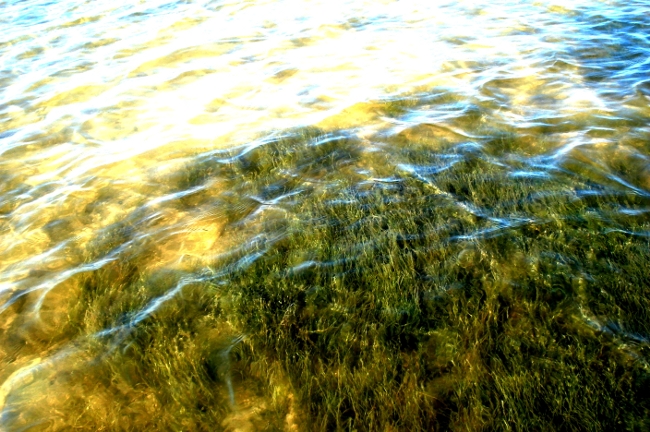
Halodule grass bed

Thalassia grass bed. This plant was not found in Mississippi during the latest survey
SAV’s are important plants as they protect shorelines from erosion, improve water quality by trapping sediments, provide habitat, and are highly productive. The productivity of these habitats is largely due to an abundance of algae and diatom phytoplankton, which feed a diverse foodweb. Seagrasses may contain up to 1000 times more animals than a comparable area of bare sediment. Juveniles of numerous shellfish and fish can be found in seagrass habitats. Many SAV species require lots of light, and are restricted to shallow waters, which makes them prone to damage from boaters. Trimming engines up and slowing down in shallow waters can help to protect delicate and fragile SAV. Ensuring good quality water is also critical to plant success, so reducing turbidity and nutrients in storm water runoff will aid in the survival of SAV.
Salt Marshes
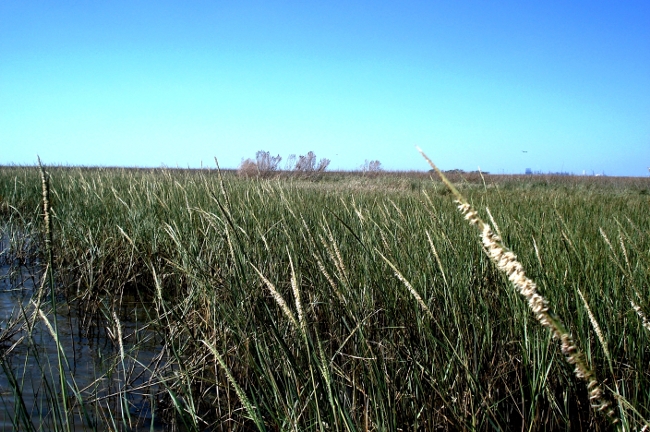
Spartina alterniflora growing in a salt marsh

Spartina alterniflora salt marsh
Tidal Oligohaline Marshes

Sagittaria lancifolia along a tidal marsh
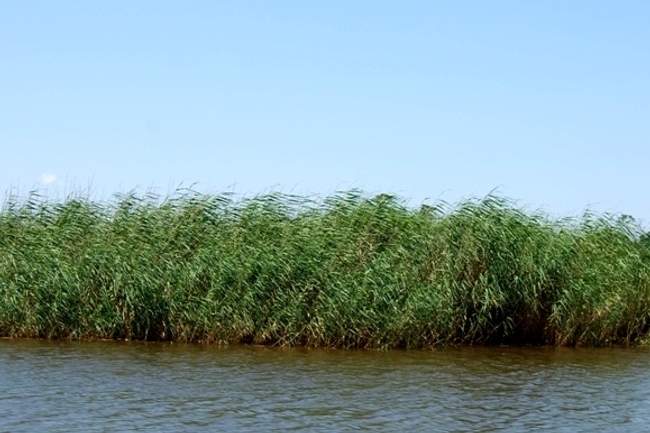
Phragmites australis, common reed
Freshwater Marshes
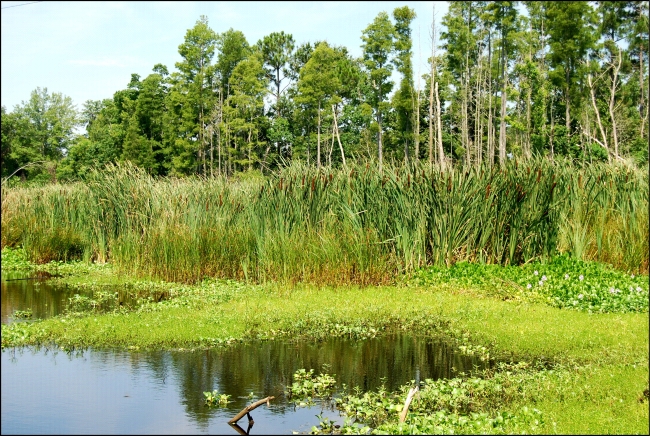
Cattail (Typha) and waterhyacinth (Eichhornia) in a freshwater marsh

Pickerelweed (Pontederia cordata)
Freshwater marshes are often found
in open areas near rivers , streams,
bayous as well as ponds and lakes. They can be
categorized into tidal- and non-tidal
marshes. The water in freshwater marshes is
usually is rich in minerals. Species diversity is generally higher
in freshwater marshes than in salt
marshes. Non-woody plants such as grasses and sedges are common. Bulrushes and cattails are often found at the edges of a marsh.
Freshwater Swamps
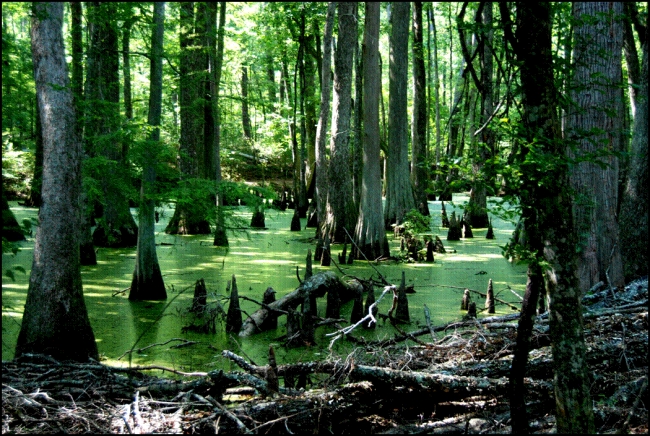
Short, conical "knees" are characteristic features of bald cypress swamps
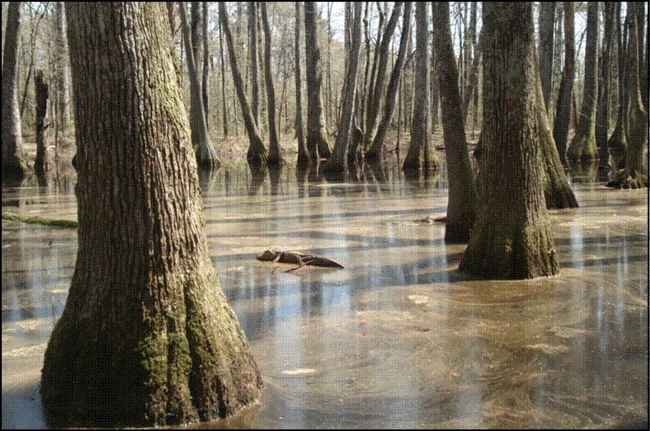
Tupelo swamp
Swamps are wetlands dominated by woody vegetation and trees. Cypress-tupelo swamps are common in
Mississippi. Common tree species include bald
cypress (Taxodium distichum), pond
cypress (Taxodium ascendens), and
water tupelo (Nyssa aquatica). Swamps are seasonally or permanently flooded by shallow water that is typically
slightly acidic and low in nutrients.